
WHAT IS THE BEST FOUNDATION FOR A LOG CABIN?
Choosing the right foundation for your log cabin is one of the most important steps in ensuring its longevity, and performance.
Whether you’re installing a small garden office or a large interlocking timber cabin, the base you build on will directly affect how well your structure stands up to time, weather, and ground movement.
Why a Solid Foundation Matters
A log cabin is only as strong as the base it sits on. Any structure needs to have an even and stable foundation.
A proper base ensures:
- Structural stability, you really want this thing to last
- Protection against ground moisture
- Proper door and window alignment
Without a suitable foundation, cabins can shift over time, leading to gaps and costly repairs.
Let’s take a look at a few options
Concrete Slab Foundation (Best Overall Option)
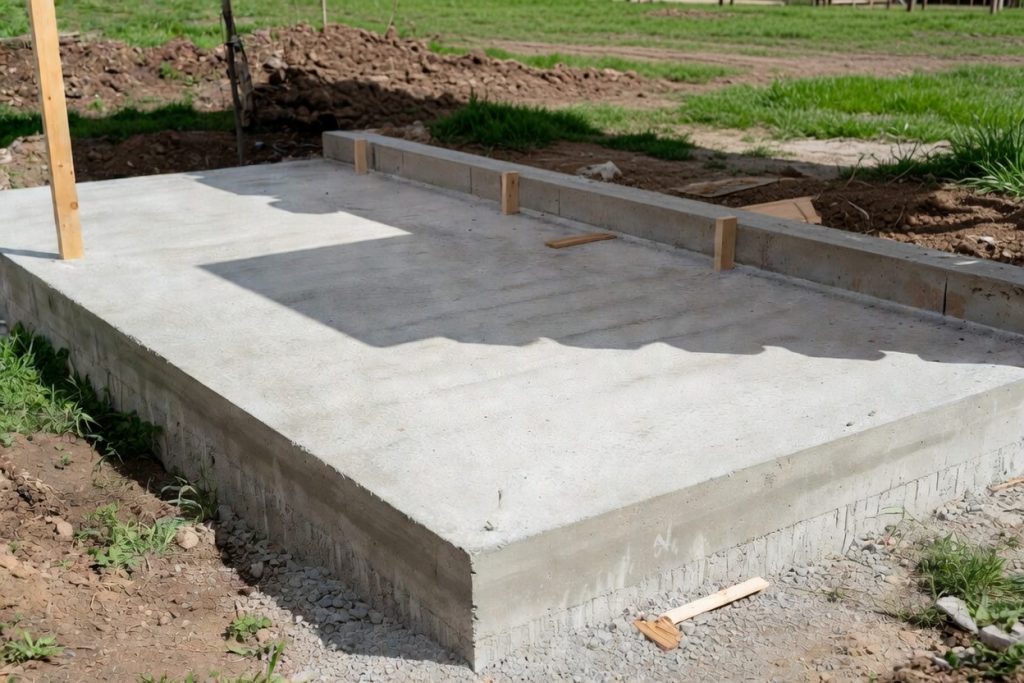
A concrete slab is usually the best foundation for a log cabin, especially for year-round use.
It provides a completely flat, solid, and permanent base that supports the full weight of the structure.
Benefits:
- Extremely stable and durable
- Ideal for large or heavy cabins
- Prevents movement and settling
- Low maintenance
Top Tips
Something to remember is that you don’t want lots of rainwater just sat on the concrete. So make sure that it drains well, and if you have used wooden shuttering, make sure it doesn’t have a lip around the edge when you have removed it, letting water just sit there. The cabin comes with pressure treated floor bearers, so getting them wet is fine, but not for weeks on end.
Also, when making it, remember that the logs intersect, so the footprint of the cabin is a little smaller than the cabin size. So if you make it to the size of the external size of the cabin, this will give you a nice bit of space around the cabin, meaning it wont be right on the edge of the slab. Anyway, take a look online for more about that.
Paving Slab Base
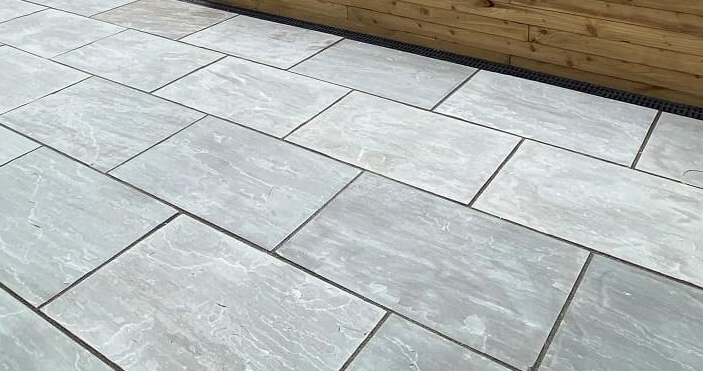
A properly prepared paving slab base is one of the most common choices for residential log cabins.
The slabs are laid on a compacted hardcore and sand foundation to create a level surface.
Benefits:
- Cost-effective
- Easier DIY installation
- Good drainage
- Suitable for most garden cabins
Ground Screw Foundation
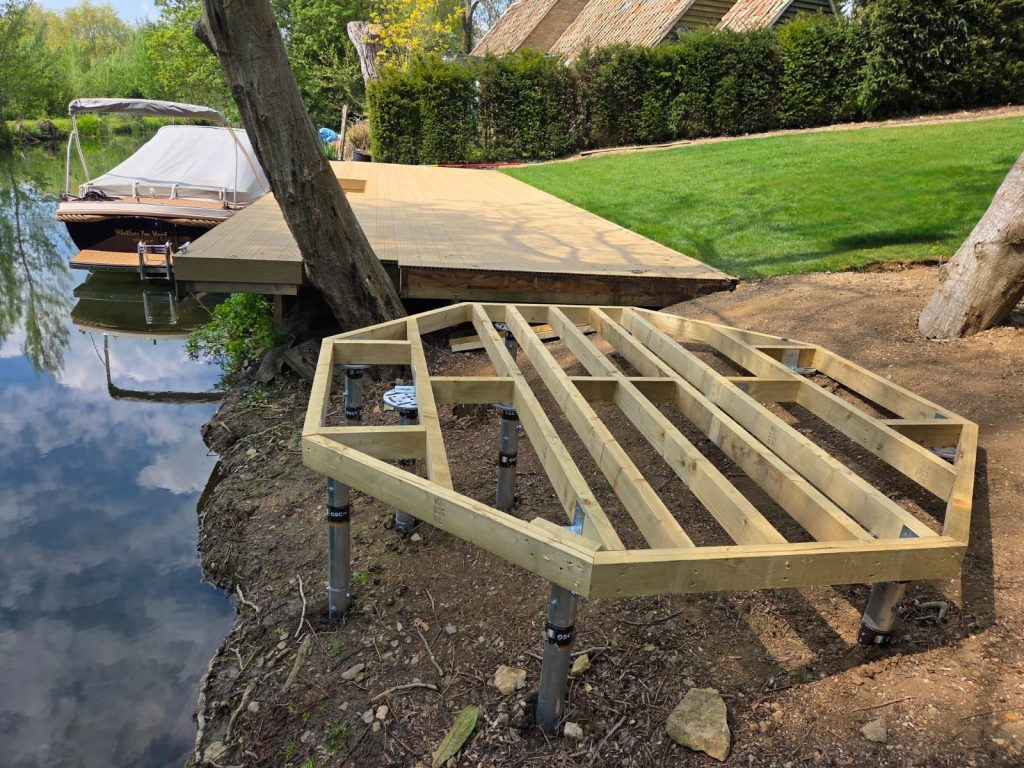
Ground screws are becoming increasingly popular for log cabin installations. They are steel posts drilled directly into the ground to create a raised, level platform.
Benefits:
- Quick installation, no digging needed
- No need for excavation or concrete
- Environmentally friendly
- Adjustable for uneven ground
- Suitable for sloped gardens
We would recommend the Ground Screw Centre as they have the largest range in the country, and great customer feedback.
Timber Frame Base (Budget Option)
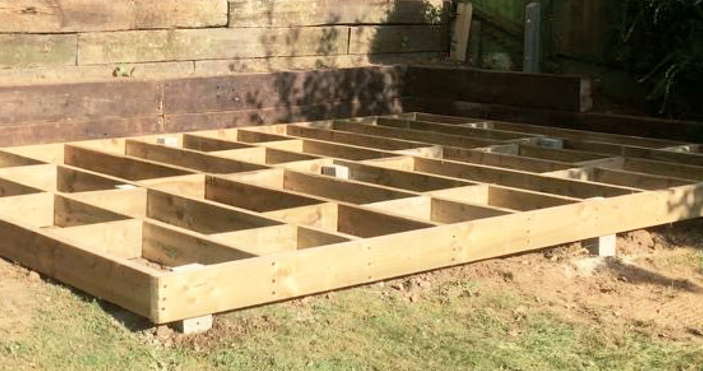
A timber sub-frame can be used for smaller cabins or temporary structures. However, it must be built correctly and treated for moisture resistance.
Benefits:
- Low cost
- Simple installation
- Lightweight
Limitations:
- Less durable than concrete or slabs
- Requires regular maintenance
- Not ideal for heavy cabins
If you can place a damp proof membrane on top, or paint the top edge with a bitumastic paint, this will help with longevity. The cabin comes with pressure treated floor bearers, so remember to make sure they are supported at regular intervals along the base.
One final idea, and one that I have used
Crushed aggregate
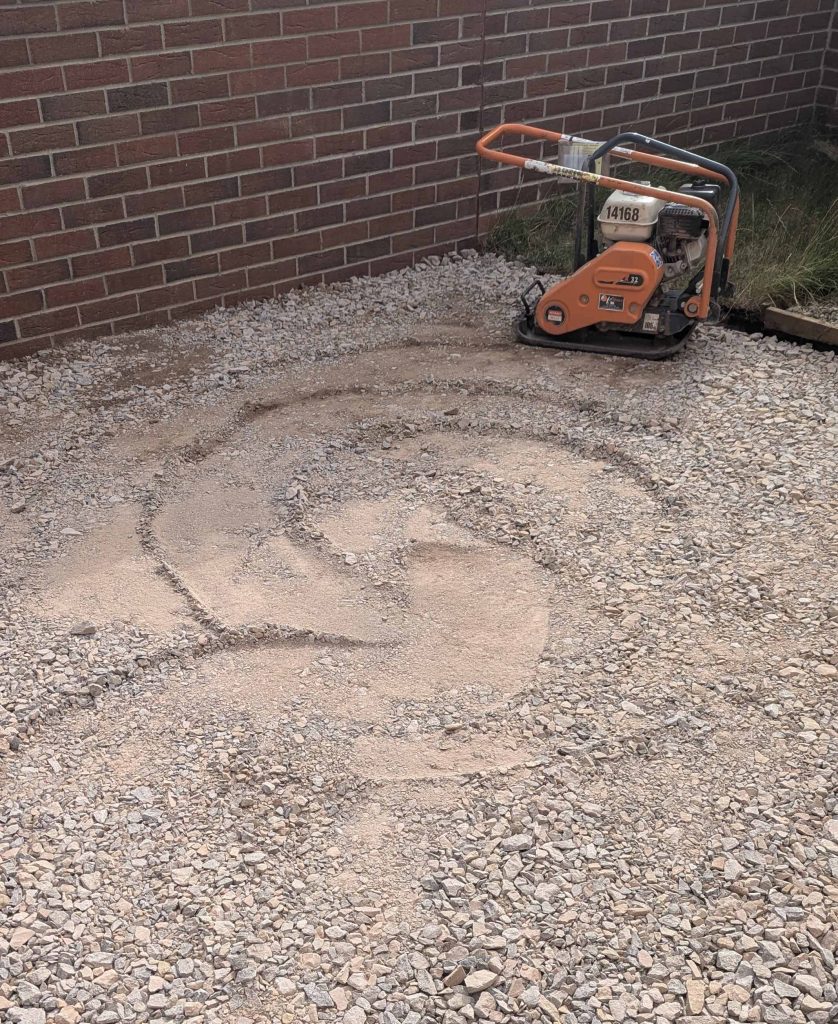
You can level you area, dig down a few inches, and then use MOT Type 1 (which is hardcore down to dust) you can spread it out, and then use a whacker plate to compact it. (You can rent these pretty cheaply)
Don’t use something like pea gravel, this will settle over time, you need hardcore.
If there is soil under it, compact the soil first too. You really want to make it as dense as possible.
Once you’ve done that, and I mean, really well compacted, you can put the cabin floor bearers down onto this and build your cabin.
I normally paint bitumen along the top and bottom of the floor bearers for extra protection.